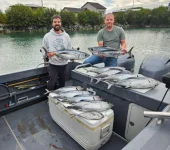
Unprecedented Albacore Tuna Run Hits Southeast Alaska Waters as Marine Heatwave Creates New Fishing Frontier
Climate-driven warm water intrusion brings southern species 1,500 miles north of normal range
By Staff Writer
September 17, 2025

SITKA, Alaska – In what marine biologists are calling an extraordinary climate-driven event, Southeast Alaska waters experienced their first documented large-scale albacore tuna fishery this month, as a massive marine heatwave pushed water temperatures to levels not seen in regional records.
The rare fishing bonanza, which played out between September 4-7 in waters off Sitka and Baranof Island, saw local anglers harvest an estimated 200 albacore tuna – a species typically found 1,500 miles south along the California and Oregon coasts.
Historic Catch Breaks New Ground

Troy Tydingco, Alaska Department of Fish and Game's Sitka sportfish area management biologist, was among the first to capitalize on the unprecedented conditions. Taking a personal day when weather and water temperatures aligned perfectly, Tydingco and six companions ventured 30 miles offshore where they encountered something virtually unheard of in Alaska waters.
"I think this is probably the first time sport anglers have really successfully targeted them and harvested them out of Sitka," Tydingco said, describing their September 4 expedition that yielded 44 albacore tuna.
The key factor? Water temperatures reaching 60 degrees Fahrenheit – the optimal range for albacore habitat, but nearly 6 degrees warmer than Sitka's typical September average of 54.1°F.
Marine Heatwave NEP25A: The Driving Force
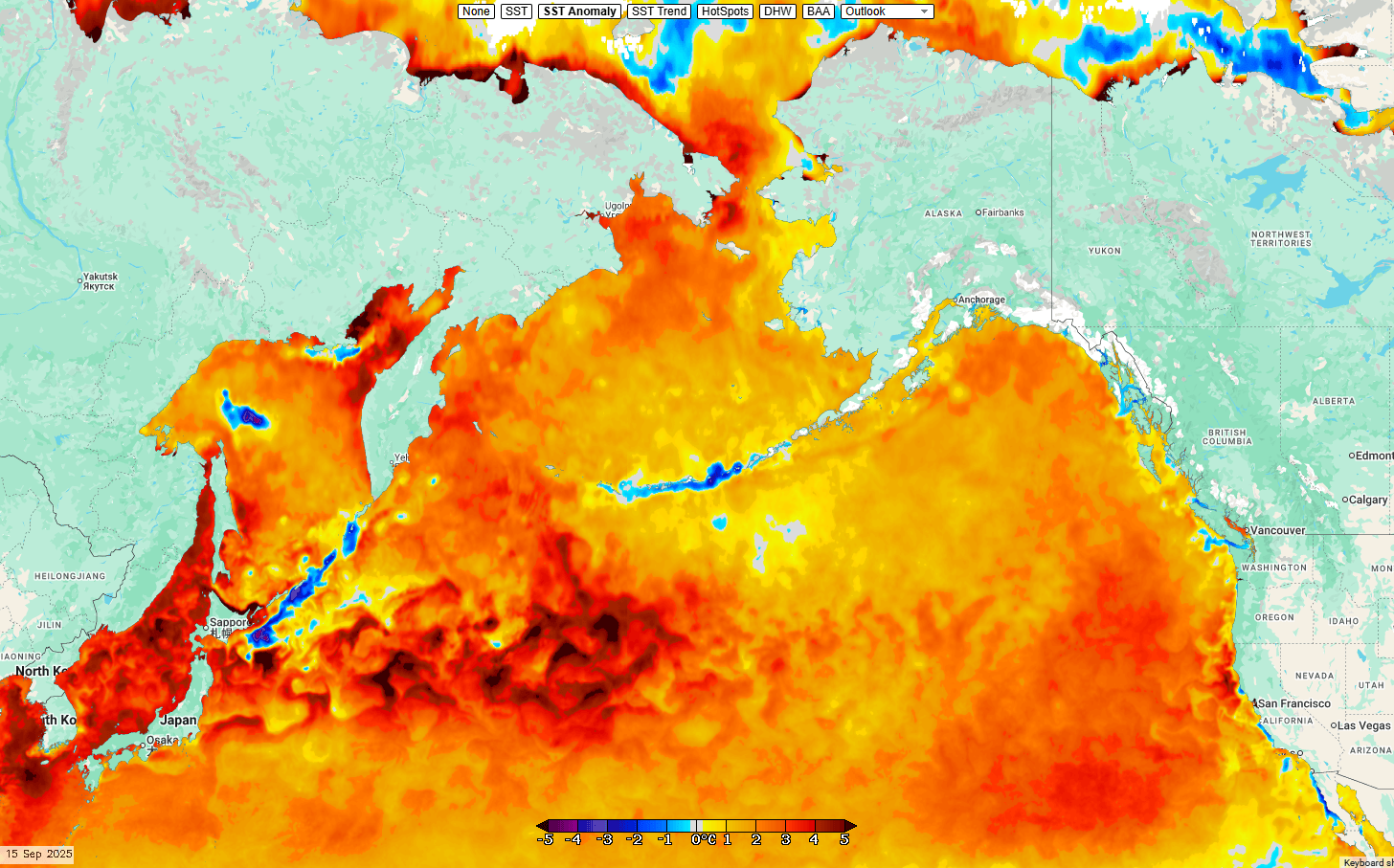
Scientific analysis confirms the tuna incursion is directly linked to Marine Heatwave NEP25A, a massive warm water anomaly that NOAA has been tracking since its emergence in early May 2025.
The heatwave, now covering nearly 8 million square kilometers, ranks as the fourth-largest marine heatwave since satellite monitoring began in 1982. The warm water mass originated in the Gulf of Alaska before expanding southward and intensifying through the summer months.
"Climate warming in the North Pacific is likely to result in expanded availability of habitat for albacore in the Gulf of Alaska," according to recent research published in Movement Ecology Journal, which predicted exactly this type of northward species migration.
From Salmon to Sashimi

The transition caught local fishing communities by surprise. Adam Olson, operations manager at the Northern Southeast Regional Aquaculture Association, was among the successful anglers who adapted quickly to the new opportunity.
"What makes it fun is that it is incredibly unique and unusual," Olson said. "We're very salmon-centric here in Southeast Alaska."
Olson's culinary review was equally enthusiastic: "It was phenomenal," he said of grilling his catch with simple salt and pepper seasoning.

The fishing required minimal gear adaptation, with anglers using standard salmon tackle to successfully hook the warm-water migrants. One enterprising angler even used a spear gun to land a skipjack tuna directly in Sitka harbor.
Regulatory Response and Commercial Potential
The unexpected tuna run prompted swift regulatory action. On September 13, the Alaska Department of Fish and Game issued an advisory outlining rules for potential commercial harvest – the first such framework established for tuna fishing in Alaska waters.Commercial tuna fishing is legal under Alaska regulations, requiring specific permits and adherence to gear restrictions. Trolling and jigging are permitted, while net fishing remains prohibited. However, despite issuing several permits to interested fishers, no commercial landings have been reported as of Monday.
Rhea Ehresmann, a Sitka-based groundfish project leader for the department, noted that Alaska manages any tuna catches since no federal fishery exists for the species in state waters.
Historical Context and Future Implications

While the Sitka tuna bonanza represents a first for the area, occasional tuna appearances in Alaska waters have historical precedent. Prince of Wales Island, at Southeast Alaska's southern tip, has seen sporadic tuna activity, and isolated catches have occurred as far north as Yakutat, including a skipjack tuna landed in 2015.
Documentary evidence of Alaska tuna fishing dates to the 1920s, according to a 1949 U.S. Fish and Wildlife Service report. A Ketchikan-based commercial operation in 1948 targeted tuna, though the fish were actually caught off British Columbia's Queen Charlotte Island.
The current event differs significantly in scale and documentation, representing the first time recreational anglers have systematically targeted and successfully harvested tuna in Sitka waters.
Climate Change Connection
The tuna migration reflects broader changes in North Pacific Ocean dynamics. NOAA scientists report that North Pacific temperatures are rising faster than any other ocean basin, with the Gulf of Alaska experiencing recent marine heat waves that create increasingly hospitable conditions for warm-water species.Sea surface temperatures have increased across virtually all marine areas globally, but the North Pacific's accelerated warming trend suggests events like the Sitka tuna run may become more frequent.
Ephemeral Opportunity
Despite the excitement, experts caution against expecting annual recurrences. Historical patterns suggest tuna presence in Alaska waters is temporary, typically lasting only weeks before the fish retreat southward as conditions cool."That warm water temperature doesn't even always make it up this far," Tydingco warned prospective tuna hunters.
Current forecasts indicate NEP25A will likely persist in offshore regions through fall, but coastal cooling typically begins in October-November, potentially ending the tuna opportunity until conditions align again.
The brief window created an almost festival atmosphere among Sitka's fishing community, with social media documentation and town-wide discussion of the unusual catches contributing to Tydingco's estimated 200-fish total harvest.
Looking Forward
Whether this September's tuna run represents a preview of Alaska's fishing future or remains an isolated climate anomaly will depend on broader ocean warming patterns. What's certain is that the event has captured the attention of resource managers, commercial fishing interests, and recreational anglers alike.As climate change continues reshaping marine ecosystems, the appearance of southern species in northern waters may become less extraordinary – transforming what was once impossible into merely improbable, and eventually, perhaps, routine.
For now, Sitka's brief tuna season stands as a remarkable example of how rapidly changing ocean conditions are rewriting the rules of where fish can thrive, creating new opportunities for those prepared to adapt as quickly as the fish themselves.
Staff reporting with data verification from NOAA Marine Heatwave Tracker, Alaska Department of Fish and Game, and peer-reviewed climate research. Additional reporting by Yereth Rosen, Alaska Beacon.
Contact: For more information about Alaska fishing regulations and marine heatwave monitoring, visit Alaska Department of Fish and Game and NOAA Fisheries.
RELATED COVERAGE: