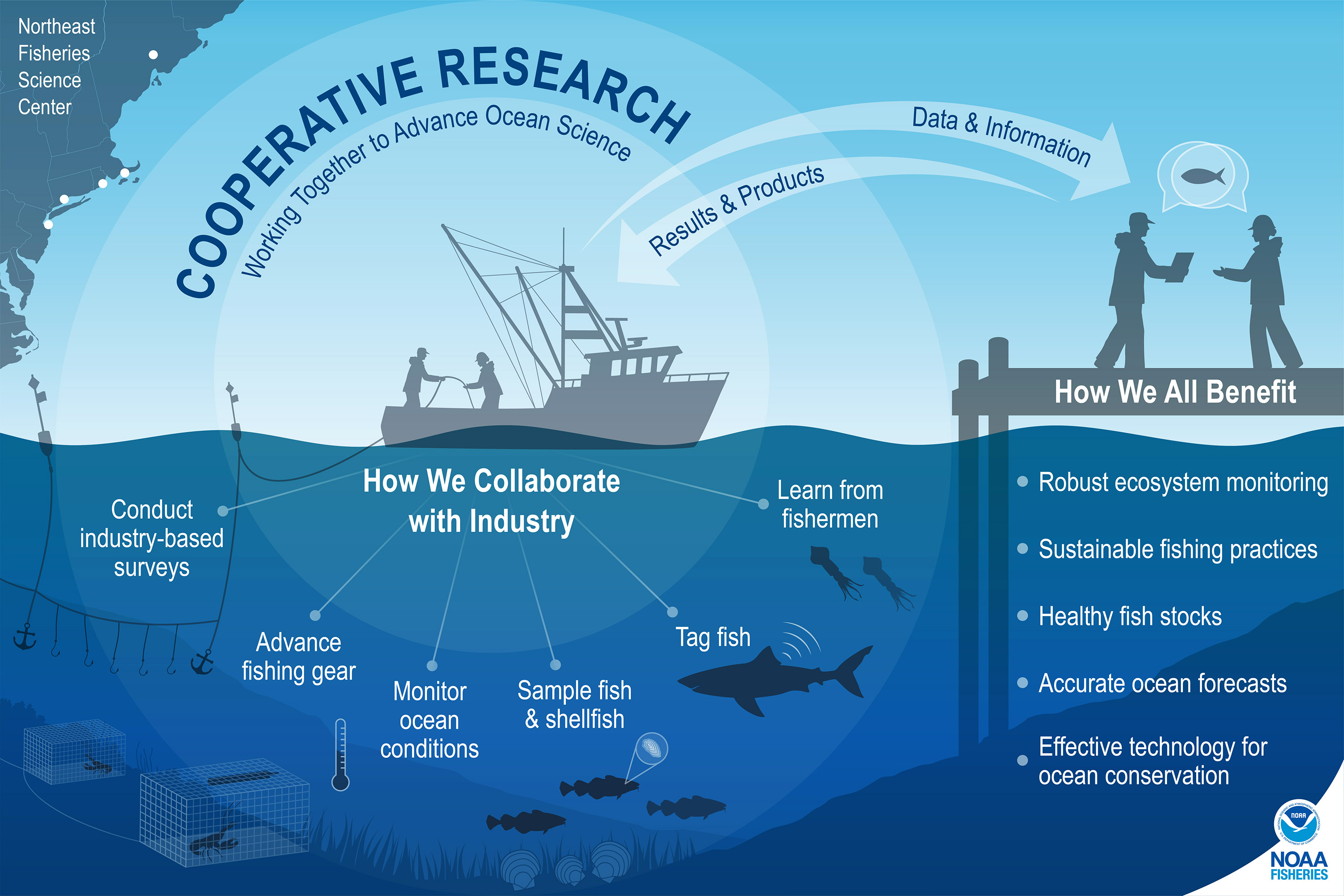
NOAA Fisheries - What’s new, what are they responsible for……

There are approximately 15.1 million recreational salt water fishermen in the United States. The U.S. population is approximately 330 million. Salt water fishermen make up about 4.6% of the population.

Fish are a natural resource, much the same as lumber, farming, fresh water, etc, etc, and etc.

Would not equal allocation of a resource take into an account the other 95% of the country that does not fish for fun? Are you saying that less than 5% of the country who fish as a hobby, fun n’ games, are entitled, or should get 50% of this natural resource?
 
The Atlantic Bluefin tuna biomass is estimated at 800-900mt. The Pacific BT biomass at 100-120mt.

NOAA regulates both so why is it that in California I can keep 10 bluefin per person but in NY its 1 per boat?

Unlike lumber and farming, I can't grown my own Tuna.

Fishing regulations in general are disproportional to the estimated biomass and it's a trend across all species. NOAA has an agenda tied to the philosophy that our oceans should be aquariums. The more MPAs the better. The Obama model lives on.
 
Last edited:
The Atlantic Bluefin tuna biomass is estimated at 800-900mt. The Pacific BT biomass at 100-120mt.
The Western BFT biomass is projecting potential decline. The Eastern biomass is not. The Pacific biomass has shown significant recovery. NOAA is presently reviewing these accessments.
NOAA regulates both so why is it that in California I can keep 10 bluefin per person but in NY its 1 per boat?

Unlike lumber and farming, I can't grown my own Tuna.
And the farmers in the Midwest who supply their bounty with the rest of the country cannot fish for BFT


Fishing regulations in general are disproportional to the estimated biomass and it's a trend across all species. NOAA has an agenda tied to the philosophy that our oceans should be aquariums. The more MPAs the better. The Obama model lives on.

That is simply your own personal interpretation of how you see things and in no way represents what the scientific community puts forward.
 
Last edited:
Day late and a dollar short. Herring have been decimated up and down the New England Coast and have other baitfish.

Next will be Menhaden if they don't wake up!

NOAA working with commercial fishermen is a direct result of repeated failures trying to get data on their own and the deteriorating condition of their research vessels.

NOAA research vessel failures often involve fires, aging infrastructure, or operational setbacks due to maintenance issues. Notable incidents include the 2023 fire aboard the NOAA Ship Rainier, which disabled its propulsion, and the 2020 decommissioning of the Hi‘ialakai due to poor condition. Despite safety protocols, failures can happen, sometimes requiring U.S. Coast Guard intervention.
Office of Marine and Aviation Operations (.gov)
Office of Marine and Aviation Operations (.gov) +3
Key Recent and Notable Failures:
  • NOAA Ship Rainier (2023): On September 5, 2023, a fire broke out in the exhaust stacks above the engine room while operating near American Samoa. While 41 personnel were safe, the ship lost propulsion, phone, and internet connectivity, necessitating a return to port.
  • NOAA Ship Ronald H. Brown (2025): A fire occurred onboard in October 2025 off the coast of Louisiana, with reports of evacuations from the platform, although no injuries were reported.
  • Fleet Aging and Decommissioning: Aging ships have resulted in operational failures. The Hi‘ialakai was decommissioned in December 2020 due to its material condition, forcing the cancellation of research, while overall fleet maintenance has been noted as a significant challenge.
  • Older Incidents: Historically, the research vessel Researcher (1970) and others have faced operational issues over their lifespans, and in some contexts, external vessels working on NOAA projects have encountered issues.
    Office of Marine and Aviation Operations (.gov)
    Office of Marine and Aviation Operations (.gov) +5
 
Day late and a dollar short. Herring have been decimated up and down the New England Coast and have other baitfish.

Next will be Menhaden if they don't wake up!

NOAA working with commercial fishermen is a direct result of repeated failures trying to get data on their own and the deteriorating condition of their research vessels.

NOAA research vessel failures often involve fires, aging infrastructure, or operational setbacks due to maintenance issues. Notable incidents include the 2023 fire aboard the NOAA Ship Rainier, which disabled its propulsion, and the 2020 decommissioning of the Hi‘ialakai due to poor condition. Despite safety protocols, failures can happen, sometimes requiring U.S. Coast Guard intervention.
View attachment 114690Office of Marine and Aviation Operations (.gov) +3
Key Recent and Notable Failures:
  • NOAA Ship Rainier (2023): On September 5, 2023, a fire broke out in the exhaust stacks above the engine room while operating near American Samoa. While 41 personnel were safe, the ship lost propulsion, phone, and internet connectivity, necessitating a return to port.
  • NOAA Ship Ronald H. Brown (2025): A fire occurred onboard in October 2025 off the coast of Louisiana, with reports of evacuations from the platform, although no injuries were reported.
  • Fleet Aging and Decommissioning: Aging ships have resulted in operational failures. The Hi‘ialakai was decommissioned in December 2020 due to its material condition, forcing the cancellation of research, while overall fleet maintenance has been noted as a significant challenge.
  • Older Incidents: Historically, the research vessel Researcher (1970) and others have faced operational issues over their lifespans, and in some contexts, external vessels working on NOAA projects have encountered issues.
    View attachment 114691Office of Marine and Aviation Operations (.gov) +5

And with NOAA facing over 27% budget cuts things will probably get worse.


Fishing Reports

Latest articles

Back
Top