the "Headline That Caught My Attention or the WTF" thread

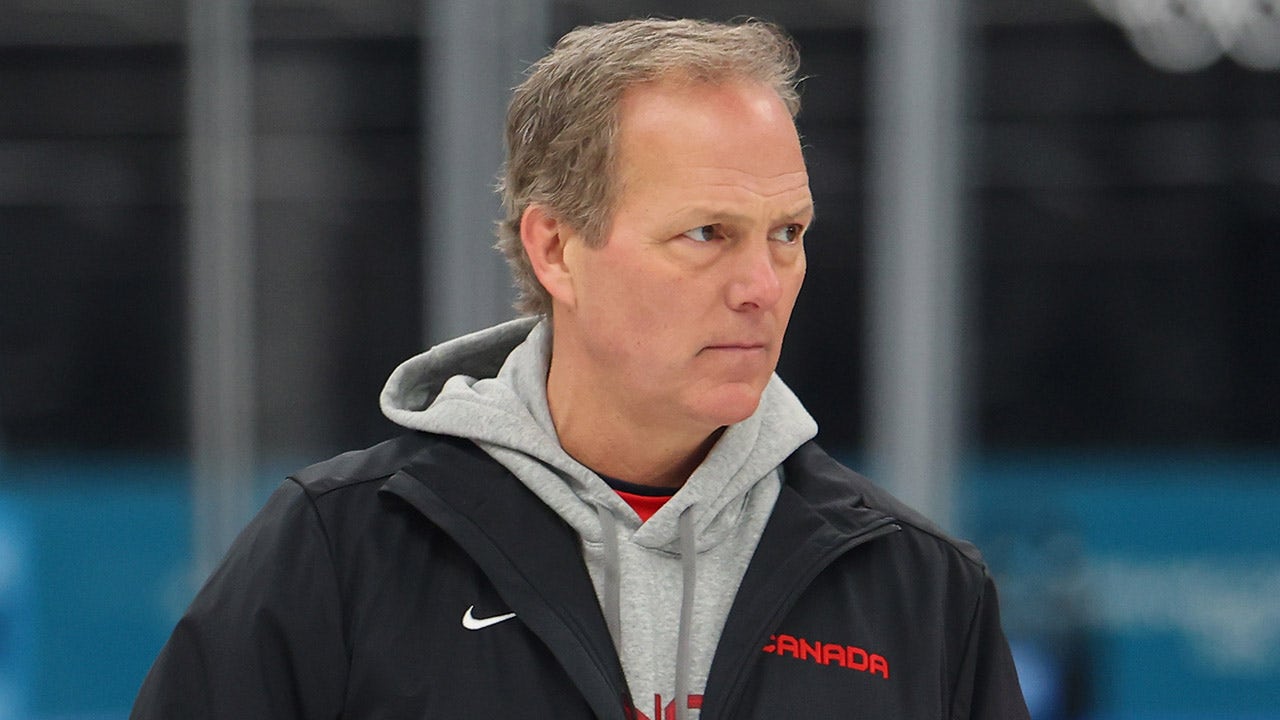
Lots of sour grapes from the Canucks about the rules. Didn't seem to bother them so much when they were winning.


It was interesting to watch the medal ceremony. I don't think a single player on the Canadian team said Thank You when the received their medal. Winning a silver medal at the Olympics is a tremendous accomplishment, but their sense of entitlement was quite clear. If the situation were reversed I'd bet money the US players would have been far more gracious losers.

I also loved MacKinnon's comment about who the better team was. It reminds me of Vince Lombardi's comment after the losing coach said "But we had more first downs." Vince's reply was "Okay. Next time we'll play for first downs."

Next time we'll play for shots on goal. Meanwhile the goose f@¢#ers can keep making $#itty whine from those sour grapes. Drink up boys. You've got a four year supply.
 
it was interesting to watch the medal ceremony. I don't think a single player on the Canadian team said Thank You when the received their medal.
The Admiral said that too when the medals were about 1/2 done. About 1/2 of the last few players said thanks when I watched.

Personally, the bigger rink and the 3 skater overtime makes for a much better game. I just love Olympic hockey, far more skating and passing; Hockey as God intended it to be played!!

And from the Roccus Book of Hockey: NEVER EVER underestimate the value of a hot Goalie in a playoff situation.
 
A very well-written piece. Mandating childhood vaccinations to ensure Herd Immunity, could be interpreted as an abdication of a well-formed and compassionate education system regarding the science.

Sure, mandates are easier and a more effective implementation without education. However it does allow for Antivaxers to cultivate doubt because few, if any folks are truly educated on the science involved. One would hope that a well-implemented education system would help enough people to understand the importance of vaccinations for both themselves and others; we mustn't forgot those individuals who cannot benefit from vaccinations because they are immunocompromised and depend on herd immunity for their health.

OK, I'm off the soapbox.

You Can’t Shame People Into Vaccinating Their Kids. I Should Know.

In February 2025, a 6-year-old child died of measles in Texas, marking the first death from the disease in the United States in a decade. Shortly after that, another school-age child died from it. Many others have become severely ill. A 7-year-old in South Carolina was recently hospitalized with brain swelling.

On Instagram, where people posted about the deaths and hospitalizations, I saw comments about the parents: “Is she fit to be a mom?” “Their children should be taken away.” “Parents should be arrested for manslaughter.”

I read these comments with a sinking feeling, because those children could have been me. Those parents could have been my parents. I was not vaccinated until the age of 23. Learning why my mother didn’t vaccinate me, and then choosing to vaccinate myself, has led me on a lifelong journey in understanding how love and fear intertwine and what it really takes for people to change their minds.

I was born in 1988, the first of two children. When the pediatrician brought up vaccines, my mom felt that my doctor rushed through her questions, that for him, vaccinating me was just another box to check. Because of insurance and transportation issues, she wasn’t able to follow up with a different pediatrician for a second opinion.

She remembers finding a pamphlet someone had left in the doctor’s office waiting room that recounted stories of children harmed by vaccines. She found more pamphlets and books after that.

She weighed what she understood to be the two risks: the diseases themselves versus the vaccines meant to prevent them. She chose the option that seemed less scary. “I came to my decision based on the way I felt inside,” she told me when I asked her recently why she didn’t vaccinate me. “I didn’t want to take any chances.”

Luckily, other children got vaccinated, and I benefited from the community immunity to diseases like measles that so many of us now take for granted (and which we are losing today). As I got older, my world expanded. I met people whose lives looked different from mine. I fell in love with science.

Science gave me data, but like many people, I found that alone wasn’t enough to change my mind. Science also gave me new stories and relationships that contrasted with the anti-vaccine viewpoints of my childhood. I heard about diseases that once filled hospital wards and led to early childhood death. I became friends with people using science to try to make the world better. Eventually, the stories I had grown up with that said scientists were corrupt and that vaccines were worse than the diseases they protect against no longer held up to my scrutiny.

Shortly before I began my Ph.D. research in an immunology lab, I walked into a doctor’s office and asked to be vaccinated.

I was angry that my mother fell for lies. Angry that she had risked my health. Angry that I now had to spend time and money catching up on two decades of missed protection.

But I also loved her and feared her reaction to my getting vaccinated. I waited months to tell her.

Eight years after I was vaccinated, I called my mother to tell her I was pregnant with my first child. She asked me whether I planned to vaccinate the baby.

I hung up, furious and hurt that she still didn’t understand why, after studying immunology, I was confident that the benefits of vaccines outweigh their risks.

Then my son was born.

They placed him on my chest and my heart exploded with love. Suddenly, discussions of relative risk and statistical significance meant nothing compared with the steady rise and fall of his chest.

The next day, a nurse asked whether he could receive his hepatitis B vaccine, and I hesitated.

I had hemorrhaged twice during delivery, lost three liters of blood, and needed multiple transfusions. I was physically and emotionally depleted. In that one exhausted moment, what was loudest in my head was not the science I knew so well. It was the stories I had heard growing up.

Delaying the vaccine felt easier than deciding. I initially told the nurse we would do the vaccine at his first pediatrician’s visit in a few days.

It wasn’t until the day we were getting discharged that something shifted. I spoke to a friend about my decision to delay. She didn’t overwhelm me with studies. She didn’t shame me. She was kind and empathetic. She affirmed my desire to be a good mom, and reminded me that even though I was negative for hepatitis B, we didn’t know the status of all possible caregivers.

We vaccinated him before we left the hospital.

As we drove home, I thought of my mother. Even with everything I knew about science, I had hesitated. My mother didn’t have anyone she trusted to help answer her questions, and almost everyone makes decisions influenced by emotions.

We like to believe that facts are enough. But research shows that giving people more data rarely convinces them; instead, it’s empathetic conversations and trusted messengers that can reduce vaccine hesitancy. My mom chose not to vaccinate me because she heard stories of danger. I was compelled to vaccinate because I trusted people who shared stories of protection.

When I hear stories about children getting sick from measles, I feel angry. But not at the parents. I’m frustrated at those knowingly spreading false and misleading claims, and profiting from it. Shaming and dismissing parents who are confused and trying their best won’t change minds. Instead, it can drive people deeper into communities that validate their beliefs and create echo chambers filled with inaccuracy. We have to meet parents’ concerns with empathy. That’s where real change begins.

My mother didn’t vaccinate me because she loved me.

In her mind, declining vaccinations was not negligence; it was her way of being a good parent. I don’t think sharing statistics about measles mortality would have changed her mind. And I no longer view her decision as a moral failure.

But I understand the science, and I had people who helped me navigate my shifting mind-set with kindness. And so I chose to vaccinate my two children. My reason was the same as my mother’s: I love them deeply.
 
A very well-written piece. Mandating childhood vaccinations to ensure Herd Immunity, could be interpreted as an abdication of a well-formed and compassionate education system regarding the science.

Sure, mandates are easier and a more effective implementation without education. However it does allow for Antivaxers to cultivate doubt because few, if any folks are truly educated on the science involved. One would hope that a well-implemented education system would help enough people to understand the importance of vaccinations for both themselves and others; we mustn't forgot those individuals who cannot benefit from vaccinations because they are immunocompromised and depend on herd immunity for their health.

OK, I'm off the soapbox.

You Can’t Shame People Into Vaccinating Their Kids. I Should Know.

In February 2025, a 6-year-old child died of measles in Texas, marking the first death from the disease in the United States in a decade. Shortly after that, another school-age child died from it. Many others have become severely ill. A 7-year-old in South Carolina was recently hospitalized with brain swelling.

On Instagram, where people posted about the deaths and hospitalizations, I saw comments about the parents: “Is she fit to be a mom?” “Their children should be taken away.” “Parents should be arrested for manslaughter.”

I read these comments with a sinking feeling, because those children could have been me. Those parents could have been my parents. I was not vaccinated until the age of 23. Learning why my mother didn’t vaccinate me, and then choosing to vaccinate myself, has led me on a lifelong journey in understanding how love and fear intertwine and what it really takes for people to change their minds.

I was born in 1988, the first of two children. When the pediatrician brought up vaccines, my mom felt that my doctor rushed through her questions, that for him, vaccinating me was just another box to check. Because of insurance and transportation issues, she wasn’t able to follow up with a different pediatrician for a second opinion.

She remembers finding a pamphlet someone had left in the doctor’s office waiting room that recounted stories of children harmed by vaccines. She found more pamphlets and books after that.

She weighed what she understood to be the two risks: the diseases themselves versus the vaccines meant to prevent them. She chose the option that seemed less scary. “I came to my decision based on the way I felt inside,” she told me when I asked her recently why she didn’t vaccinate me. “I didn’t want to take any chances.”

Luckily, other children got vaccinated, and I benefited from the community immunity to diseases like measles that so many of us now take for granted (and which we are losing today). As I got older, my world expanded. I met people whose lives looked different from mine. I fell in love with science.

Science gave me data, but like many people, I found that alone wasn’t enough to change my mind. Science also gave me new stories and relationships that contrasted with the anti-vaccine viewpoints of my childhood. I heard about diseases that once filled hospital wards and led to early childhood death. I became friends with people using science to try to make the world better. Eventually, the stories I had grown up with that said scientists were corrupt and that vaccines were worse than the diseases they protect against no longer held up to my scrutiny.

Shortly before I began my Ph.D. research in an immunology lab, I walked into a doctor’s office and asked to be vaccinated.

I was angry that my mother fell for lies. Angry that she had risked my health. Angry that I now had to spend time and money catching up on two decades of missed protection.

But I also loved her and feared her reaction to my getting vaccinated. I waited months to tell her.

Eight years after I was vaccinated, I called my mother to tell her I was pregnant with my first child. She asked me whether I planned to vaccinate the baby.

I hung up, furious and hurt that she still didn’t understand why, after studying immunology, I was confident that the benefits of vaccines outweigh their risks.

Then my son was born.

They placed him on my chest and my heart exploded with love. Suddenly, discussions of relative risk and statistical significance meant nothing compared with the steady rise and fall of his chest.

The next day, a nurse asked whether he could receive his hepatitis B vaccine, and I hesitated.

I had hemorrhaged twice during delivery, lost three liters of blood, and needed multiple transfusions. I was physically and emotionally depleted. In that one exhausted moment, what was loudest in my head was not the science I knew so well. It was the stories I had heard growing up.

Delaying the vaccine felt easier than deciding. I initially told the nurse we would do the vaccine at his first pediatrician’s visit in a few days.

It wasn’t until the day we were getting discharged that something shifted. I spoke to a friend about my decision to delay. She didn’t overwhelm me with studies. She didn’t shame me. She was kind and empathetic. She affirmed my desire to be a good mom, and reminded me that even though I was negative for hepatitis B, we didn’t know the status of all possible caregivers.

We vaccinated him before we left the hospital.

As we drove home, I thought of my mother. Even with everything I knew about science, I had hesitated. My mother didn’t have anyone she trusted to help answer her questions, and almost everyone makes decisions influenced by emotions.

We like to believe that facts are enough. But research shows that giving people more data rarely convinces them; instead, it’s empathetic conversations and trusted messengers that can reduce vaccine hesitancy. My mom chose not to vaccinate me because she heard stories of danger. I was compelled to vaccinate because I trusted people who shared stories of protection.

When I hear stories about children getting sick from measles, I feel angry. But not at the parents. I’m frustrated at those knowingly spreading false and misleading claims, and profiting from it. Shaming and dismissing parents who are confused and trying their best won’t change minds. Instead, it can drive people deeper into communities that validate their beliefs and create echo chambers filled with inaccuracy. We have to meet parents’ concerns with empathy. That’s where real change begins.

My mother didn’t vaccinate me because she loved me.

In her mind, declining vaccinations was not negligence; it was her way of being a good parent. I don’t think sharing statistics about measles mortality would have changed her mind. And I no longer view her decision as a moral failure.

But I understand the science, and I had people who helped me navigate my shifting mind-set with kindness. And so I chose to vaccinate my two children. My reason was the same as my mother’s: I love them deeply.
Very interesting take on what motivates people in making decisions. Sometimes there is more to it than meets the eye. Certainly that is the case in the woman in your post. I can sympathize with her.

I know many people who are anti vaccination, but I don’t think they would fit into that mold because they are avoiding vaccinations out of love. I think they are uneducated, and being prone to believe conspiracy theories. Not only can you not shame them into thinking vaccines are proven for the betterment of public health, they cannot be convinced with even a common sense scientific approach.
 
Very interesting take on what motivates people in making decisions. Sometimes there is more to it than meets the eye. Certainly that is the case in the woman in your post. I can sympathize with her.

I know many people who are anti vaccination, but I don’t think they would fit into that mold because they are avoiding vaccinations out of love. I think they are uneducated, and being prone to believe conspiracy theories. Not only can you not shame them into thinking vaccines are proven for the betterment of public health, they cannot be convinced with even a common sense scientific approach.
Yes, there’s always the You Can’t Fix Stupid population
 
Another one from the You Can't Fix Stupid Files. My emphasis for the epiphany at the end...

Parents Tried to Shield Their Children From Vaccines. Instead They Got Measles.​

Spartanburg County in South Carolina is ground zero for the largest measles outbreak since 2000. One school has a vaccination rate of 21 percent.

The Global Academy of South Carolina, a public charter school, is housed in a glittering modern building on a sprawling campus, a 10-minute drive from the spunky downtown Spartanburg. It has Ukrainian- and Russian-language teachers on staff, reflecting that many of its roughly 600 students belong to a thriving Slavic community, whose lives revolve around the evangelical churches in surrounding Spartanburg County.

But on Oct. 8, South Carolina’s public health department made an ominous announcement: Global Academy was one of two schools in Spartanburg County where measles had been detected. Only 21 percent of its students were vaccinated, one of the worst rates for a public school in the state.

By Tuesday, the outbreak centered in Spartanburg County had grown to 990 cases, mostly in unvaccinated children, accounting for the vast majority of current cases in the United States. Two children have developed a serious complication, measles encephalitis, an inflammation and swelling of the brain.

Spartanburg, on the border of North Carolina, is now ground zero for the largest measles outbreak since 2000, when the virus was declared eliminated in the United States.

People have been exposed not just in niche communities, but also where the public goes every day — Costco, Best Buy, Publix, Food Lion, Goodwill, Burger King, Walmart, Target, the library, a museum and the post office.

“This is not normal,” said Dr. Linda Bell, the state epidemiologist, at a news conference in February. “This is unprecedented.”

Measles was vanquished more than 25 years ago because of high rates of vaccinated schoolchildren. But in Spartanburg, those mandates have been weakened by vaccine skepticism and the state’s religious exemption, which has driven vaccination rates perilously low.

Many parents want the right to decide medical treatments for their children. But the recent contagion shows what happens when that safety net — meant to keep children safe — is clipped.

“We have allowed measles to have a foothold in this country again, which is very unfortunate,” said Dr. Tom Frieden, a former director of the Centers for Disease Control and Prevention who now leads a global health nonprofit, Resolve to Save Lives.

The Exemptions​

States have long mandated immunizations before children can start day care or school. But 46 states grant exemptions for religious or personal beliefs, according to KFF, a nonprofit health policy research organization.

South Carolina has allowed parents to claim religious exemptions since at least 1980. To qualify, they simply must attest that immunizations “conflict with my religious beliefs.”

The number of exemptions had, until recently, remained relatively low.

But during the pandemic, anti-vaccination activism grew, with parents objecting to what they saw as coercive mandates surrounding the Covid vaccine. More parents began claiming religious exemptions.

In Spartanburg County, the percentage of students with religious exemptions has more than doubled to 9.6 percent from 4.5 percent in the 2021-2022 school year.

Today, 89 percent of Spartanburg’s students have childhood immunizations, including measles, well below the 95 percent coverage needed to prevent the virus from spreading.

Statewide, kindergarten vaccination has fallen to 91 percent in the 2024 -2025 school year from 95 percent in 2019-2020, according to the C.D.C.

Nationally over the same time period, the percentage has dropped to 93 percent from 95 percent.

Dr. Bell, the state epidemiologist, said at a recent weekly news conference that “exemptions have had a big role” in the outbreak.

Public health experts say that what is happening in South Carolina could be a harbinger for other states.

Across the country, there were 50 outbreaks in 2025 and 2,281 cases with three deaths — a big increase from 2024, according to the C.D.C.

This year, there have already been 10 new outbreaks and 1,136 cases, including in Spartanburg.

State Senator Margie Bright Matthews, a Democrat, has sponsored a bill to eliminate the religious exemption. But it faces an uphill battle in the Republican-controlled state legislature.

“I immediately started getting emails from a lot of folks saying how dare I infringe upon parental rights,” she said. “My bill does not infringe upon a parental right. It protects children.”

Henry McMaster, the state’s Republican governor, has acknowledged that measles is dangerous, but supports the exemption for parents. “What we want to do is be sure people have all the information they need,” he told reporters last month, while attending a tourism conference.

Nationally, anti-vaccination activists, who are close to Robert F. Kennedy, the health secretary, are trying to repeal state laws that for decades have required children to be vaccinated against measles, polio and other diseases before they enter day care or kindergarten.

The momentum is going in the wrong direction, said Dr. Dan Jernigan, who resigned in protest in August as the director of the National Center for Emerging and Zoonotic Infectious Diseases, which is part of the C.D.C.

“You’ve got some people wanting to get rid of the base line,” he said, “and for it to be purely voluntary.”

Vulnerable From the Start​

Because measles is highly contagious and opportunistic, it first finds footholds among groups with low vaccination rates. Close-knit communities are especially vulnerable, and Spartanburg has a large Slavic evangelical population.

The state does not collect data on the patient’s country of origin, Dr. Bell said. But, she added, “We know that some schools with a high percentage of children from Ukrainian- or Russian-speaking families have been impacted.”

Global Academy, the public charter school that emphasizes Slavic languages, stood out for its exceptionally low percentage of immunized students. (Its principal, Mark Robertson, referred all questions for this article to the state health department.)

But there are many others that don’t come close to the 95 percent goal. Fairforest Elementary had an immunization rate of 82 percent. At Campobello Gramling, a public school, the rate is 80 percent. At Westgate Christian, a private school, the rate is 47 percent. The schools did not reply to requests for comment.

Overall, 75 of 93 Spartanburg County schools on the state list — including public and private schools — do not have vaccination rates of at least 95 percent, according to data from the state health department.

The state’s updates suggest that churches have also been heavily affected.

On Nov. 19, the state health department notified an evangelical church, Way of Truth, that a person with measles had visited the church twice in early November. On Dec. 9, the department reported 16 new cases linked to Way of Truth.

Viktor Radion, the pastor, sat in a church conference room before a Sunday service in late February to talk about the outbreak. Speaking mostly in Russian through a translator, he said the church, with about 260 members, was no more responsible for driving the contagion than any other place, and it had fully cooperated with the health department.

The church neither “forbids nor promotes” vaccination, he said, adding, the decision is “on the conscience of each citizen.”

The Uphill Battle​

There is some evidence that the outbreak has been scary enough — and the state response effective enough — that people sought out vaccination. More than 16,800 doses of measles-mumps-rubella vaccine were administered statewide in January 2026, an increase of more than 40 percent from January 2025. In Spartanburg County, vaccinations rose by 162 percent in January 2026 from January 2025.

Each jab represents a hard-fought victory. Doctors must somehow talk to skeptical parents in a way that does not alienate them, said Dr. Joshua Brownlee, an assistant professor of pediatrics at the medical school at University of South Carolina, Greenville.

“You can’t be too finger-waggy,” he said. “You have to listen.”

The state has offered free vaccinations at health vans, parking them at a community center and churches. But the uptake has been disappointing.

From October to mid-February, the vans have dispensed 71 doses of the measles vaccine, with 22 of them in children, the state said.

But people may be getting their vaccine behind closed doors, through doctors and pharmacies, said Dr. Jernigan, who resigned from the C.D.C.

Public health authorities, he said, must offer shots, to some degree, on the down-low.

They must make sure that people “know how to get the vaccine in ways that they don’t have to show up and be in front of a camera,” Dr. Jernigan said. “They’re trying to meet people where they are, which is part of what you do in public health.”

The measles vaccine is normally given in two doses, when a child turns 1 and before kindergarten.

But the state health department has encouraged doctors to add a dose for babies ages 6 to 11 months who live in or visit the outbreak area.

Many parents, however, want to do the opposite: Delay the vaccine or stretch out the period between doses, thinking that would be easier on their child’s immune system.

“I’m not against vaccination,” explained Olga Grabovsky, whose husband is a partner at Prostor, a popular Eastern European grocery in Spartanburg. Her two older children got a vaccination, she said. But with the youngest one, she said, “I’ve been reading a little more about it,” and may delay, after talking to her doctor.

“I will choose what’s right for my family,” she said. “I have this right.”

Some doctors say better late than never. Dr. Natalie Bikulege-Baum, a pediatrician in nearby Greenville, said, “If ultimately that is the way we will get a child vaccinated, then let’s do it.”

Sometimes, real-life experience persuades parents. On a recent Friday, a blue-and-yellow van offered free vaccinations in the parking lot of the Zion Hill Baptist Church in Inman, a semirural neighborhood of small wood frame houses.

Over four hours, one parent showed up. Tracy Hobbs brought her 5-year-old twins, a boy and a girl, to be vaccinated.

Ms. Hobbs had fully vaccinated her oldest child, now 7, as a baby. But after the child was diagnosed with autism at age 2, she blamed vaccination — and herself for allowing it.

She decided not to vaccinate her twins. But when they, too, were found to be autistic, she said she did more research, reading “Mama Google.”

Now, she was vaccinating her children, she said, not just for them but for “everybody’s kid around you.”

 

Latest articles

Back
Top