

Around the World in 80 Casts: Global Aquatic Wildlife Discoveries
A Weekly Dive into the Planet's Most Bizarre, Rare, and Fascinating Aquatic Creatures
Introduction
The vast, shimmering expanse of our planet's oceans, lakes, and rivers holds secrets that we are only just beginning to uncover. Every week, scientists, researchers, and intrepid explorers plunge into these depths, returning with tales of creatures so strange, so beautiful, and so utterly alien that they defy our wildest imaginations. In this week's edition of "Around the World in 80 Casts," we embark on a journey to the farthest reaches of the aquatic realm, from the inky blackness of the deep sea to the murky waters of remote rainforest streams. We will encounter a fish with a body so transparent its beating heart is visible, a mysterious glowing mollusc that hunts with a ghostly hood, a tiny jellyfish with an astonishing 24 eyes, and a groundbreaking discovery of hundreds of new species in an area targeted for deep-sea mining. These are not tales from science fiction; they are real-life discoveries that remind us how much of our own planet remains a mystery, and how vital it is to protect these fragile ecosystems before their secrets are lost forever.
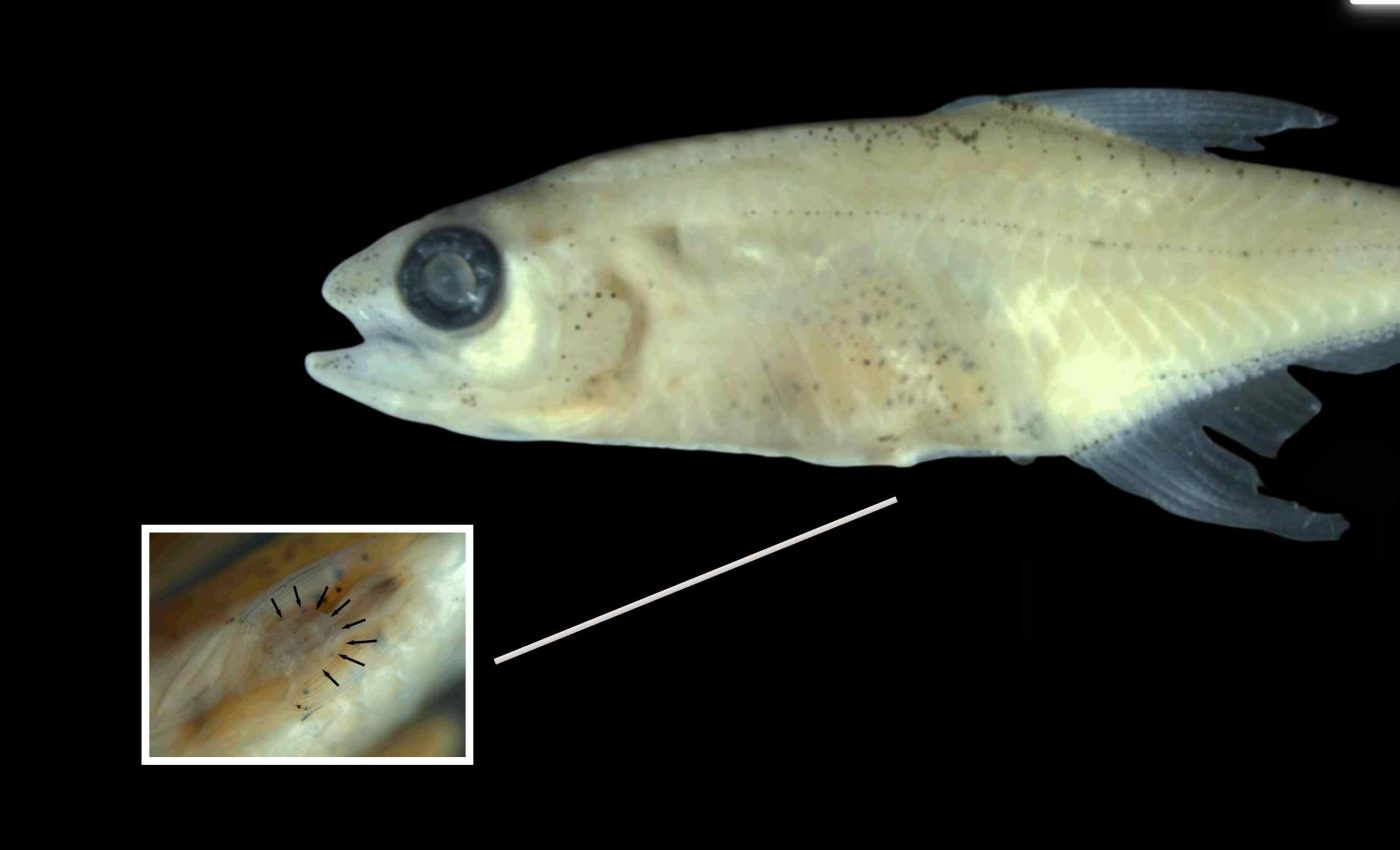
The King of the Minnows: Priocharax rex, the Fingernail-Sized Fish with a Secret Organ
Deep within the lush, labyrinthine waterways of the Colombian Amazon, a discovery has been made that challenges our understanding of evolution in miniature. Scientists have identified a new species of fish, so small it could comfortably rest on a fingernail, yet so significant it has been crowned "rex," the king of its genus. *Priocharax rex*, measuring a mere 0.8 inches, is a creature of exquisite subtlety and profound scientific importance. Found in the dark, tea-colored waters of a forest stream feeding the río Putumayo, this tiny marvel has a pale, almost translucent body, a testament to its life in the low-light conditions of the stream bed, where it navigates a world of submerged roots and leaves. But it is not its size or transparency that has captured the attention of the scientific community; it is a feature never before seen in its relatives – a peculiar, wing-like flap of skin located between its pelvic fins. This "skin wing," as it has been informally dubbed, hangs like a delicate curtain under the fish's belly, a completely novel structure in this group of miniaturized tetras. The discovery, led by George Mendes Taliaferro-Mattox of the Federal University of São Carlos in Brazil, highlights a fascinating aspect of evolution: that even as organisms shrink to minuscule sizes, they can still develop complex and entirely new anatomical features. The function of this skin wing remains a mystery, with scientists speculating it could play a role in stabilizing the fish in the current, in courtship displays, or even in sensing its environment. The existence of *Priocharax rex* and its unique organ serves as a powerful reminder that the Amazon, a region of immense biodiversity, still holds countless secrets, many of them hidden in plain sight, in the bodies of its smallest inhabitants. The discovery, published in the prestigious journal *Zootaxa*, underscores the urgent need for conservation efforts in these delicate ecosystems, as the narrow range of this new species means that deforestation or changes in water quality could wipe out its entire population before we have even begun to understand its place in the intricate web of Amazonian life.
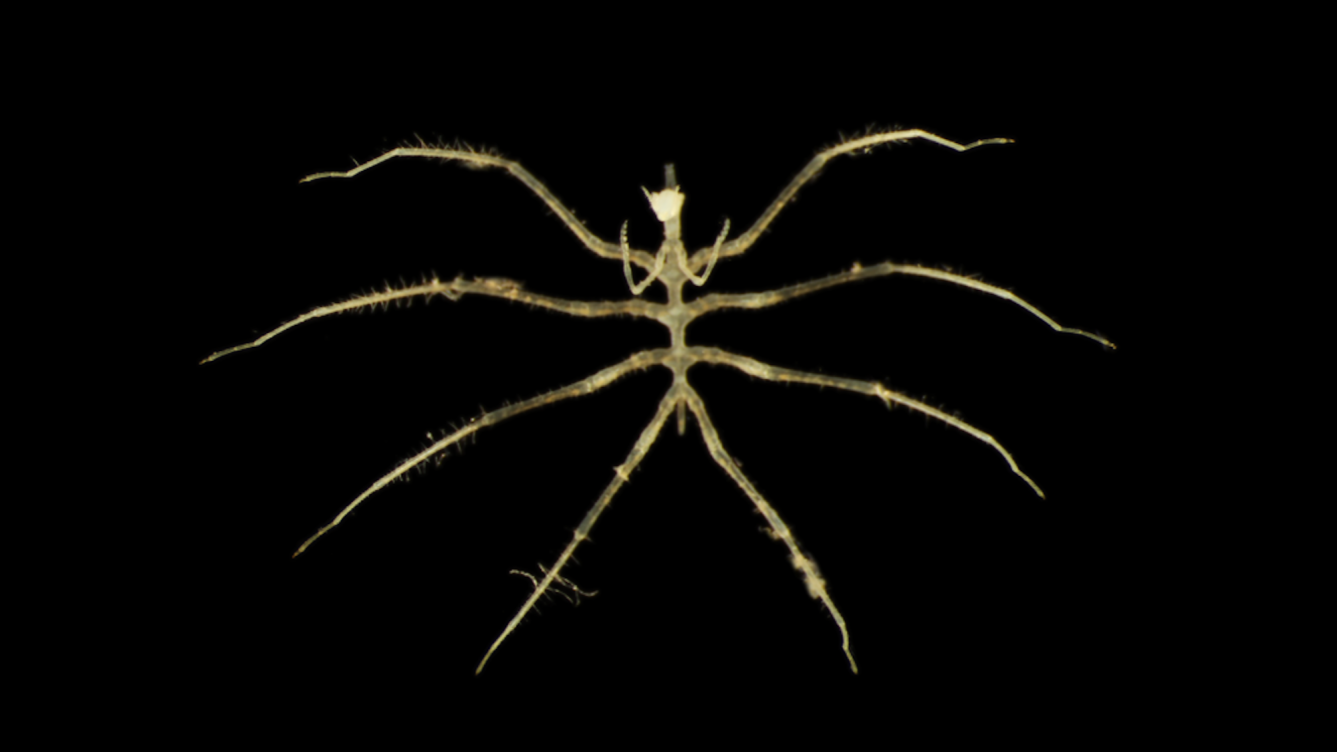
A Treasure Trove of Life in the Abyss: Hundreds of New Species Discovered in Deep-Sea Mining Zone
In a landmark study that has sent ripples through the worlds of marine biology and industrial resource extraction, researchers have uncovered a staggering diversity of life in a region of the deep sea targeted for mining. The Clarion-Clipperton Zone (CCZ), a vast abyssal plain stretching between Hawaii and Mexico, has long been known for its rich deposits of polymetallic nodules, making it a prime target for companies seeking to harvest rare earth metals from the ocean floor. But a recent environmental impact study has revealed that this area is also a cradle of biodiversity, with an astonishing 88% of the species discovered being new to science. A team of scientists, led by researchers from the University of Gothenburg and the Natural History Museum of London, spent 160 days conducting fieldwork in the CCZ, collecting over 4,350 animals from depths of more than 13,000 feet. Their findings, published in *Nature Ecology and Evolution*, paint a vivid picture of a vibrant and complex ecosystem teeming with life. Among the 788 species identified were a host of bizarre and wonderful creatures, including delicate sea spiders, otherworldly crustaceans, and a newly identified species of solitaire coral, *Deltocyathus zoemetallicus*, which grows attached to the very nodules that mining companies seek to extract. The study also provided a stark warning about the potential consequences of deep-sea mining. In the tracks of a test mining vehicle, the researchers observed a 37% decrease in the total animal population and a 32% drop in species diversity. These findings have intensified the debate over the future of the deep sea, with conservationists arguing that the potential for catastrophic environmental damage far outweighs the economic benefits of mining. The discovery of so many new species in a single study highlights how little we know about the deep ocean, which remains one of the most unexplored environments on Earth. As Adrian Glover, a researcher at the Natural History Museum of London and co-author of the study, noted, "At present, we have virtually no idea what lives there." This research serves as a critical baseline for future studies and a powerful call to action to protect these unique and fragile ecosystems from the irreversible impacts of industrial exploitation.
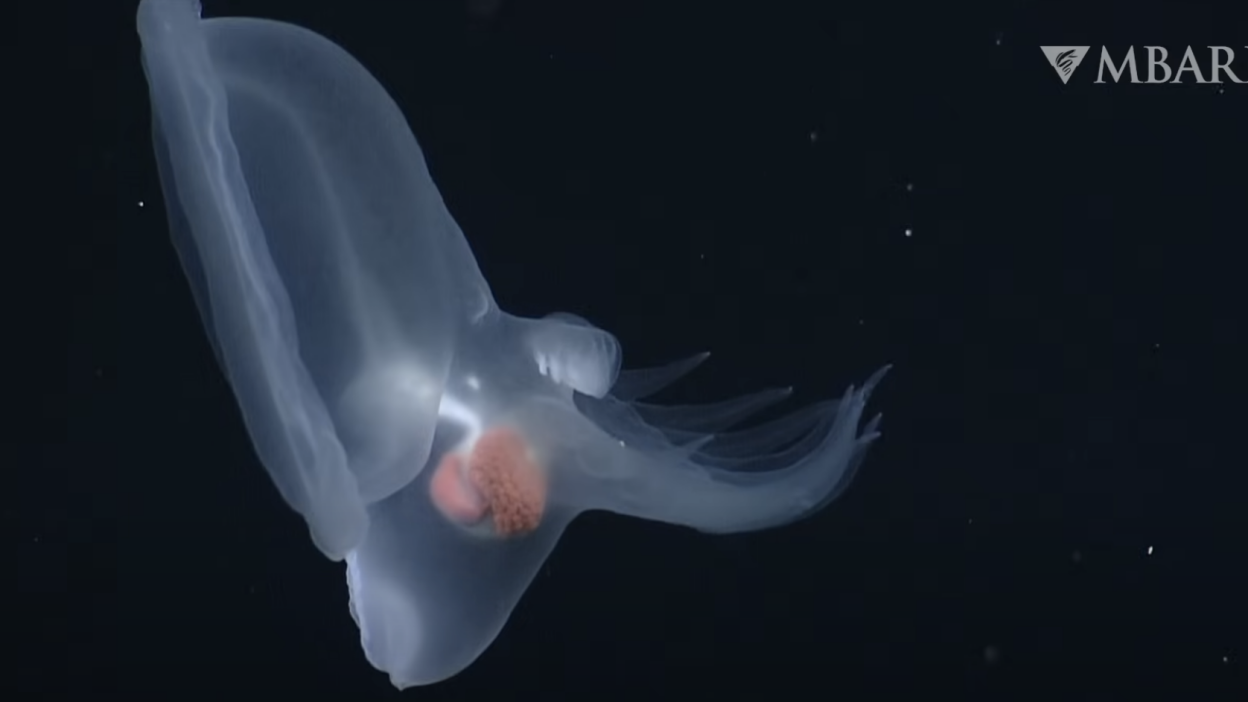
The Phantom of the Midnight Zone: The Ethereal, Glowing
Hunter of the Deep
In the perpetual twilight of the ocean's midnight zone, a realm of crushing pressure and absolute darkness, scientists from the Monterey Bay Aquarium Research Institute (MBARI) have finally put a name to a creature that has haunted their video screens for two decades. Dubbed the "mystery mollusc," this ethereal being has now been identified as a new species of nudibranch, *Bathydevius caudactylus*. But this is no ordinary sea slug. Living at depths between 3,300 and 13,100 feet off the coast of California, this creature has evolved a suite of extraordinary adaptations for a life in the abyss. Its body is almost completely transparent, a ghostly form of camouflage in a world where there is nowhere to hide. It is bioluminescent, capable of producing its own light, a common trait in the deep sea but one that this creature uses in a particularly dramatic fashion. Researchers watched in astonishment as, when threatened, the nudibranch detached one of its own glowing, finger-like appendages, which then floated away as a brilliant decoy to distract predators. Perhaps most fascinating is its hunting method. *Bathydevius caudactylus* employs a large, expandable hood to trap unsuspecting crustaceans, engulfing them in a manner reminiscent of a Venus flytrap. The identification of this species, published in *Deep-Sea Research Part I*, was a monumental effort, requiring 150 sightings over 20 years and sophisticated genetic testing. As MBARI senior scientist Steven Haddock described the team's excitement, "When we first filmed it glowing with the ROV, everyone in the control room let out a loud 'Oooooh!' at the same time. We were all enchanted by the sight." The discovery of this unique animal, which represents a previously unknown family, underscores how much of the deep sea, which constitutes 70% of the planet's seawater, remains a vast, unexplored frontier, filled with creatures and biological processes we are only just beginning to comprehend.
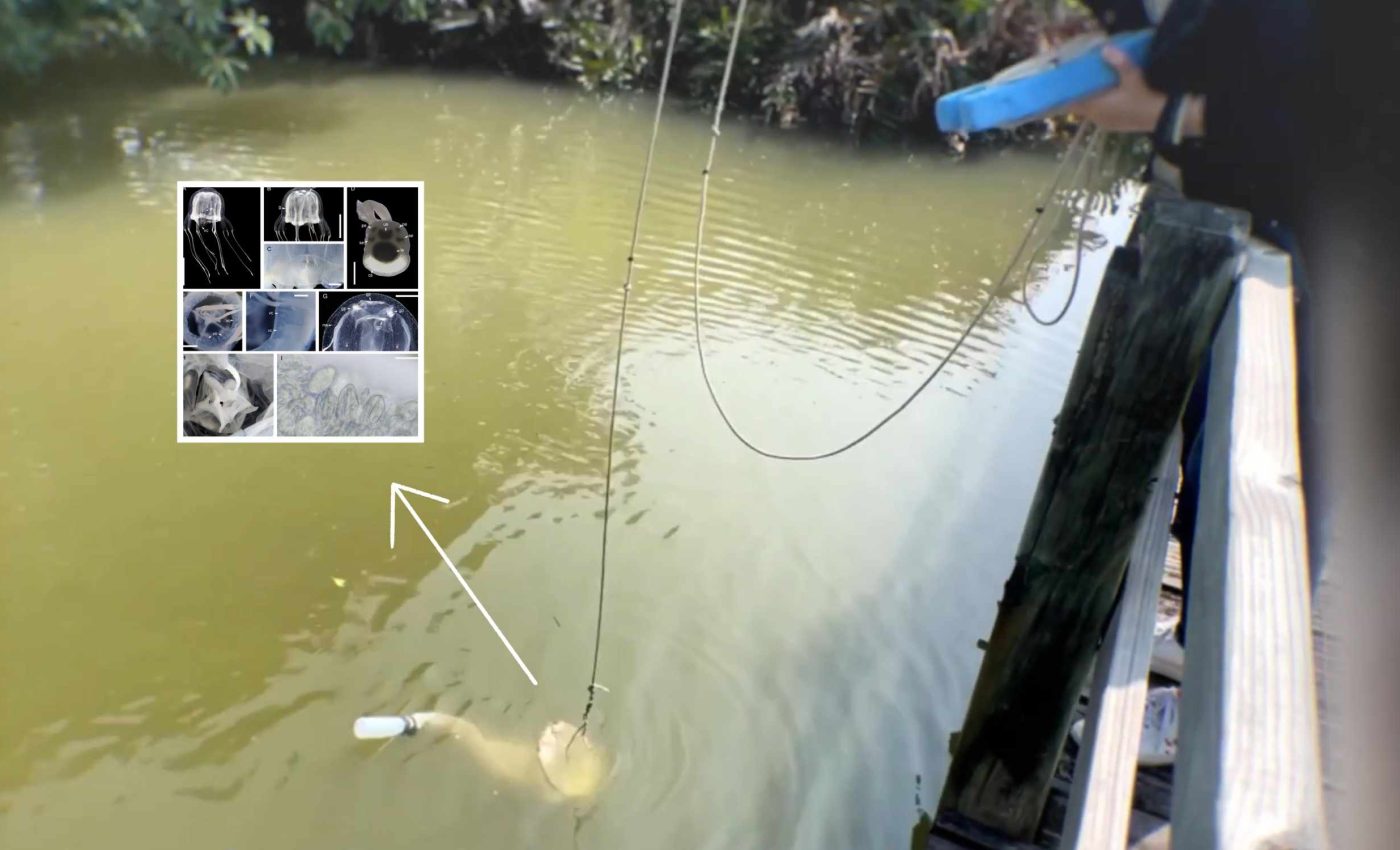
The Jellyfish with 24 Eyes: A Complex Visual System in a Brainless Creature
In a brackish shrimp pond in Hong Kong's Mai Po Nature Reserve, a seemingly simple creature has been discovered that possesses a visual system of staggering complexity. *Tripedalia maipoensis*, a new species of box jellyfish, is a tiny, transparent cube just half an inch long, but it is equipped with an incredible 24 eyes. This discovery, made by a team led by Professor Qiu Jianwen of Hong Kong Baptist University, marks the first time a box jellyfish has been formally described from Chinese coastal waters. The 24 eyes are arranged in four clusters of six, located on sensory structures called rhopalia that hang from the four corners of its bell. Each cluster contains two types of eyes: two larger, more complex lens eyes, capable of forming images, and four simpler pit and slit eyes that primarily detect light and dark. This sophisticated visual apparatus allows the jellyfish to perform surprisingly complex behaviors despite lacking a centralized brain. Scientists believe that, like its Caribbean relative, *Tripedalia maipoensis* uses its upward-facing eyes to navigate through the mangrove roots of its habitat, staying in sunlit patches where its crustacean prey is abundant. The discovery, detailed in the journal *Zoological Studies*, also provides further evidence that these 'primitive' animals are capable of associative learning, able to change their behavior based on past experiences, such as bumping into obstacles. The existence of such a creature in a managed, human-impacted environment like a shrimp pond highlights the resilience of nature and suggests that countless other undiscovered species may be hiding in the most unexpected of places.
Conclusion
From the nearly invisible to the brilliantly luminous, this week's discoveries have once again pulled back the curtain on the sheer wonder and diversity of life that thrives in the aquatic environments of our world. We have seen that even the smallest of creatures can possess novel biological structures, that the deepest, most remote parts of our oceans are home to vibrant communities yet unknown, and that even brainless animals can exhibit complex behaviors that challenge our definitions of intelligence. These findings are more than just scientific curiosities; they are a profound testament to the endless creativity of evolution and a stark reminder of our responsibility to explore, understand, and protect these invaluable ecosystems. As we continue to push the boundaries of exploration, we must also redouble our efforts to ensure that these incredible creatures, and the habitats they call home, will continue to inspire awe and wonder for generations to come. The ocean's depths still hold more questions than answers, and the journey of discovery is far from over.


