

Around the World in 80 Casts: Global Aquatic Wildlife Discoveries
By George Scocca
Introduction
The world beneath the waves is a realm of endless mystery and wonder. Every week, scientists and explorers uncover new forms of life, witness incredible behaviors, and expand our understanding of the planet’s aquatic ecosystems. From the crushing pressures of the deep sea to the vibrant shallows of tropical reefs, the diversity of life is simply astounding. This week is no exception, with a host of bizarre and beautiful creatures making their debut on the world stage. In this installment of "Around the World in 80 Casts," we’ll journey to the depths of Monterey Bay, the brackish ponds of Hong Kong, the icy waters of the Sea of Japan, and the frigid abyss of the Antarctic to meet some of the planet’s newest and most unusual aquatic residents. So, grab your gear and let’s cast off into a world of incredible discoveries!
The Ghost of the Deep: Monterey Bay’s Seven-Armed Octopus
In the deep, dark waters of Monterey Bay, a creature of myth and legend has once again revealed itself. Scientists from the Monterey Bay Aquarium Research Institute (MBARI) were treated to an exceptionally rare sighting of the seven-armed octopus, *Haliphron atlanticus*. This behemoth of the deep, stretching up to 13 feet long and weighing in at a hefty 165 pounds, is a true giant of the octopus world. The encounter, which took place at a staggering depth of 2,300 feet, marks only the fifth time in 35 years that MBARI researchers have laid eyes on this elusive animal.
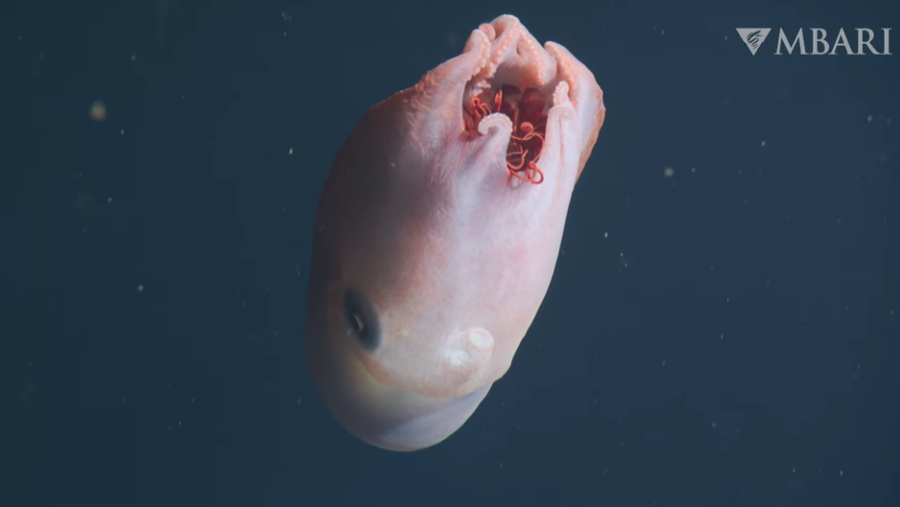
The seven-armed octopus is a master of disguise, and not just because of its deep-sea habitat. It does, in fact, have eight arms, but one is a specialized reproductive organ called a hectocotylus, which the male keeps tucked away in a sac beneath his right eye. This clever concealment gives the appearance of only seven arms, hence its common name. The recent sighting provided a valuable glimpse into the creature's feeding habits, as it was observed dining on a helmet jelly. This observation confirms that even large predators in the deep sea rely on the abundant, though not particularly nutritious, gelatinous creatures that populate the midwater. In a fascinating display of resourcefulness, the octopus has been known to use the stinging tentacles of the jellyfish for defense after consuming the bell. This remarkable behavior showcases the intelligence and adaptability of these incredible animals, reminding us that the deep ocean is a place of constant innovation and surprise.
The 24-Eyed Wonder of Hong Kong’s Shrimplands
From the inky depths of the Pacific, we travel to the surprising location of a brackish shrimp pond in Hong Kong’s Mai Po Nature Reserve. Here, scientists have discovered a new species of box jellyfish, *Tripedalia maipoensis*, a tiny creature with an astonishingly complex visual system. Measuring a mere 1.5 centimeters in length, this miniature marvel boasts 24 eyes, arranged in four groups of six. Each group, or rhopalium, contains two types of eyes: two with lenses capable of forming images, and four that are simple light sensors. This sophisticated arrangement gives the jellyfish a complete 360-degree view of its surroundings, a remarkable feat for such a small and seemingly simple animal.
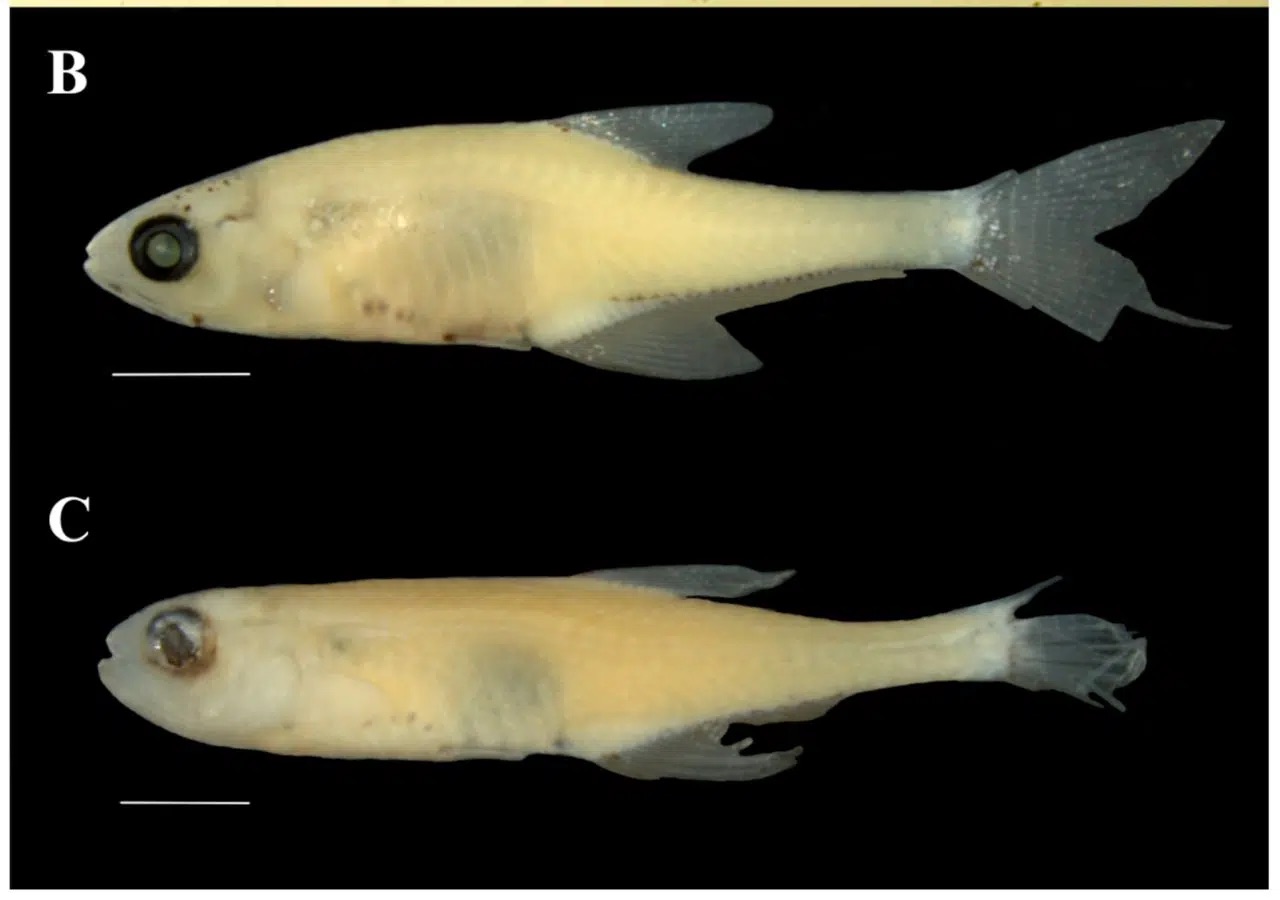
The discovery of *Tripedalia maipoensis* is significant for several reasons. It is the first time a new species of box jellyfish has been found in Chinese waters, and it is only the third species to be identified in the *Tripedalia* genus. The find challenges the long-held scientific assumption that miniaturization in animals leads to a simplification of their anatomy. This tiny jellyfish, with its intricate visual system, proves that even the smallest creatures can possess a high degree of complexity. Researchers believe that the jellyfish’s upward-facing eyes help it to navigate the complex root systems of the mangrove forests where it lives, while its other eyes keep a lookout for predators and prey. This discovery is a powerful reminder that incredible biodiversity can be found in the most unexpected of places, and that there is still much to learn about the intricate web of life in our planet’s aquatic habitats.
The Sea of Japan’s Newest “Ice Angel”
Our journey now takes us to the cold, productive waters of the Sea of Japan, where a new species of “ice angel” has been officially recognized. These ethereal creatures, known to scientists as cliones, are a type of shell-less, swimming sea slug. The new species, named *Clione japonica*, is a delicate, translucent creature, measuring only 4 to 5 millimeters in length. Its body is so clear that its orange and reddish internal organs are visible, adding a splash of color to its ghostly form. These tiny animals “fly” through the water by flapping a pair of wing-like appendages called parapodia, earning them their angelic nickname.
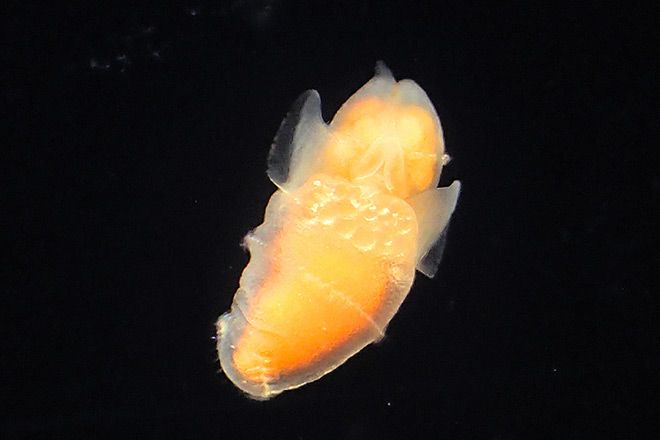
The confirmation of *Clione japonica* as a new species is the culmination of a decade of research. The creature was first collected in 2016 in Toyama Bay, and its unique characteristics led scientists to suspect it was a new discovery. Genetic analysis has now confirmed that it is distinct from other known clione species, such as *Clione okhotensis*, from which it differs in both its genetic makeup and the shape of its lobopods, small organs on the body surface. Researchers believe that *Clione japonica* evolved in isolation in the Sea of Japan, a testament to the unique evolutionary pressures of this semi-enclosed sea. The discovery of this new “ice angel” highlights the hidden biodiversity of the world’s oceans and the importance of continued exploration and research. It is a reminder that even in well-studied regions like the Sea of Japan, new and fascinating creatures are still waiting to be found.
Antarctica’s Alien Abyss: A Trove of New Deep-Sea Life
Finally, we plunge into the icy abyss of the Southern Ocean, one of the most remote and extreme environments on Earth. Here, two major research expeditions have returned with a stunning bounty: the confirmation of 30 previously unknown deep-sea species. This incredible haul of new life was discovered in areas of the seafloor that have only recently become accessible, following the breakup of the colossal A-84 iceberg. The discoveries paint a picture of a bizarre and alien world, populated by creatures that defy imagination.
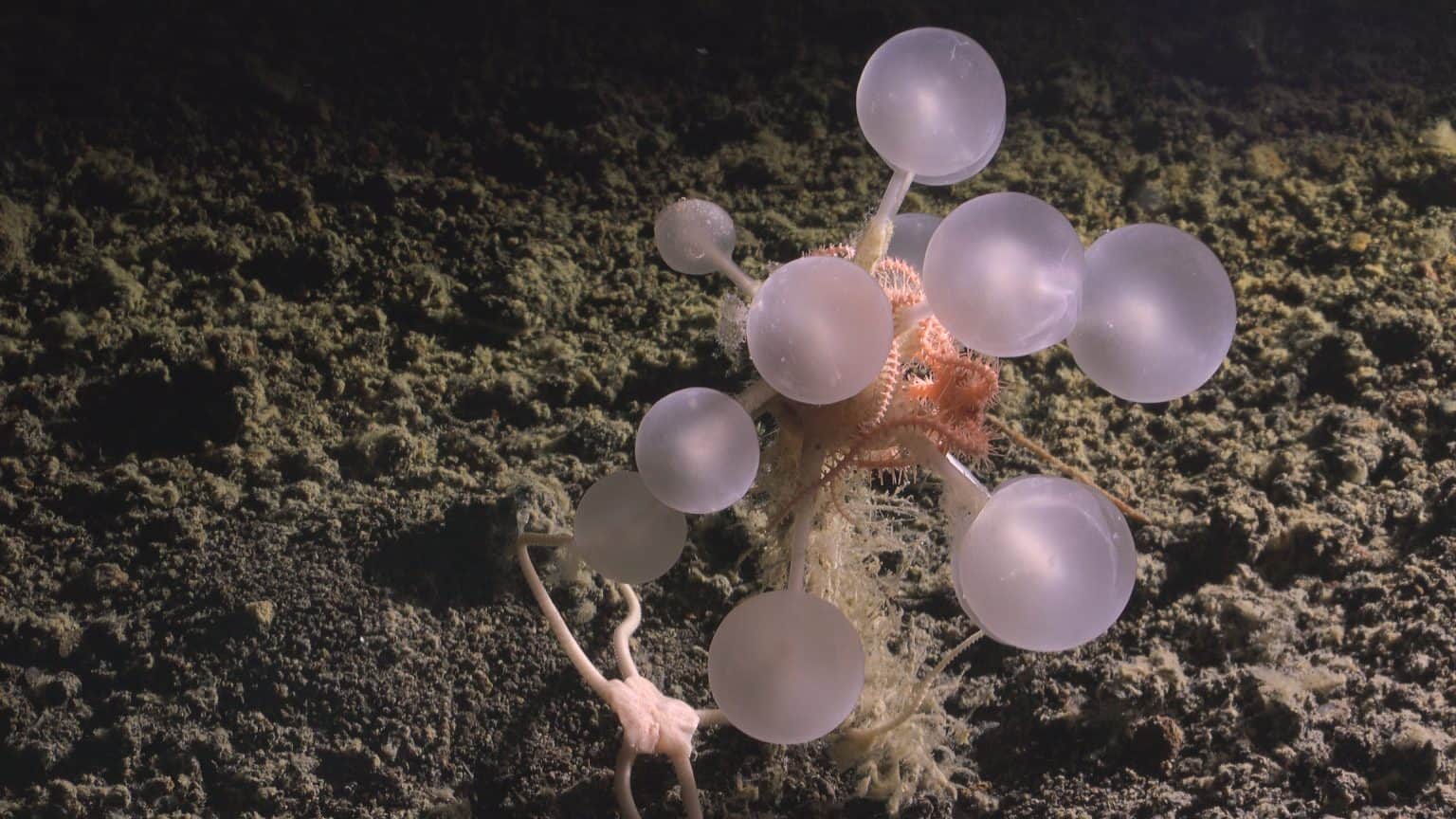
Among the most spectacular finds is a new species of carnivorous sponge, dubbed the “death-ball” sponge. Unlike its filter-feeding relatives, this predator uses a network of hooked, glass-like spicules to ensnare small crustaceans that drift by. The expeditions also uncovered iridescent, armored scale worms, ghostly ethereal corals, and several new species of sea stars and crustaceans. These discoveries were made in a variety of extreme habitats, including hydrothermal vents, volcanic calderas, and deep-sea trenches, demonstrating the incredible adaptability of life in the deep ocean. What is perhaps most exciting is that scientists have so far analyzed less than 30 percent of the samples collected. This means that the 30 new species are just the tip of the iceberg, and that many more strange and wonderful creatures are waiting to be identified. This research, conducted by the Nippon Foundation-Nekton Ocean Census and the Schmidt Ocean Institute, is a monumental step forward in our understanding of the planet’s last great wilderness.
Conclusion
This week’s journey has taken us to the far corners of the globe, from the familiar waters of the California coast to the unexplored depths of the Antarctic. The discoveries we’ve highlighted are a powerful testament to the resilience and diversity of life on Earth. They remind us that our planet is a place of constant discovery, and that there are still vast, unexplored frontiers teeming with life that we are only just beginning to understand. The seven-armed octopus, the 24-eyed jellyfish, the delicate sea angel, and the bizarre creatures of the Antarctic abyss are not just scientific curiosities; they are a vital part of the intricate web of life that sustains our planet. As we continue to explore the world’s oceans, lakes, and rivers, we can only imagine what other incredible creatures are waiting to be discovered. The world of aquatic wildlife is a story that is constantly unfolding, and we look forward to bringing you the next chapter in our ongoing exploration of the weird and wonderful world beneath the waves.


