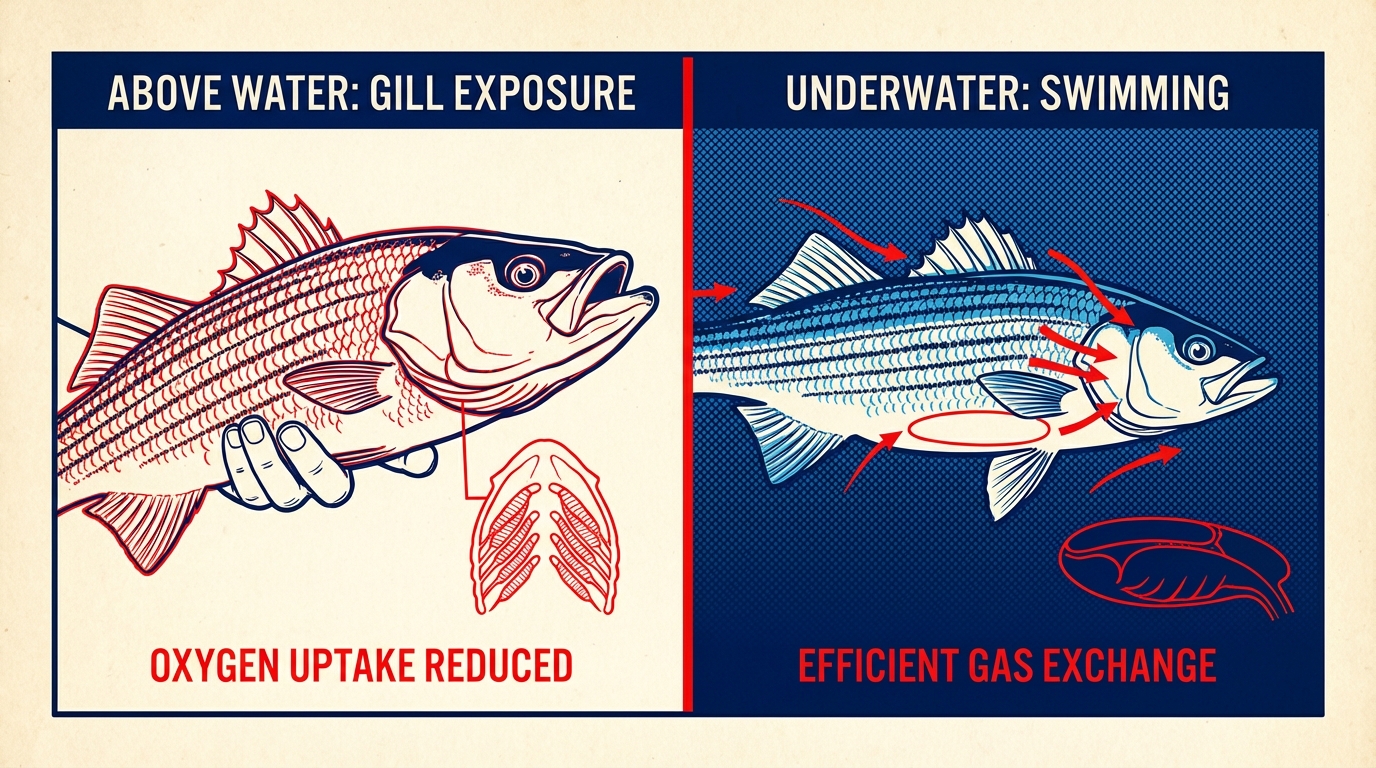
UMass Striped Bass Study - Full Citation and Key Findings
Full Citation
Title: Effects of capture and handling on striped bass (Morone saxatilis) in the recreational fishery of coastal Massachusetts
Authors:
• Olivia T. Dinkelacker (a)
• Grace A. Casselberry (a)
• Lucas P. Griffin (a, b)
• Sascha Clark Danylchuk (c)
• Steven J. Cooke (d)
• Andy J. Danylchuk (a)
Journal: Fisheries Research
Volume: 288
Publication Date: August 2025
Article Number: 107459
DOI:
Redirecting
Institution: (a) University of Massachusetts Amherst
Key Findings
Immediate Post-Release Survival Rate: 100%
The study assessed 521 striped bass and found:
“Overall, our assessment of striped bass following capture and handling revealed an immediate post-release survival rate of 100% across all gear types and air exposure treatments, based on RAMP 2 assessments immediately prior to release as well as fish monitored for 20 min post-release with accelerometer data loggers.”
Highlights from the Study:
1. Longer fight times, handling times, and air exposure increased reflex impairment
◦ But did NOT result in mortality in the immediate post-release period
2. Reflex impairment increased with larger fish size and higher water temperatures
◦ Temperature and fish size are important factors in stress response
3. Conventional gear caused more foul hooking, and fly gear caused more bleeding
◦ Different gear types have different injury profiles
4. Despite stress indicators, NO FISH DIED in the study period
Critical Distinction
This study measured immediate post-release survival (100%) over a 20-minute monitoring period, NOT long-term mortality rates. The study does not contradict the existence of delayed mortality, but it does show that with proper handling, immediate survival is very high.
Study Design
• Sample size: 521 striped bass
• Location: Coastal Massachusetts
• Gear types tested: Multiple (conventional, fly gear, etc.)
• Air exposure treatments: Various durations
• Monitoring: RAMP 2 assessments + accelerometer data loggers for 20 minutes post-release